- support@husseinkey.com
- livechat


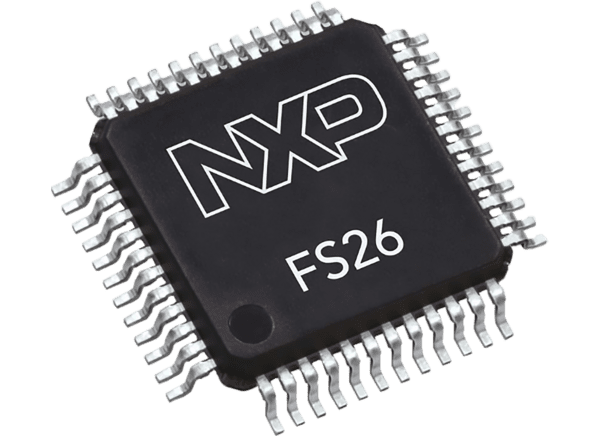
NXP Semiconductors FS26 Safety System Basis Chips support entry and mid-range safety microcontrollers; these include the S32K3 series. The FS26 SBCs provide multiple power supplies and the flexibility to work with other microcontrollers targeting automotive electrification. Other applications for the FS26 consist of a power train, chassis, safety, and low-end gateway technology. The FS26 devices consist of several versions that are pin-to-pin and software compatible. These versions support many applications with Automotive Safety Integrity Levels (ASIL) B or D, presenting options in several output rails, voltage settings, operating frequencies, power-up sequencing, and integrated system-level features.
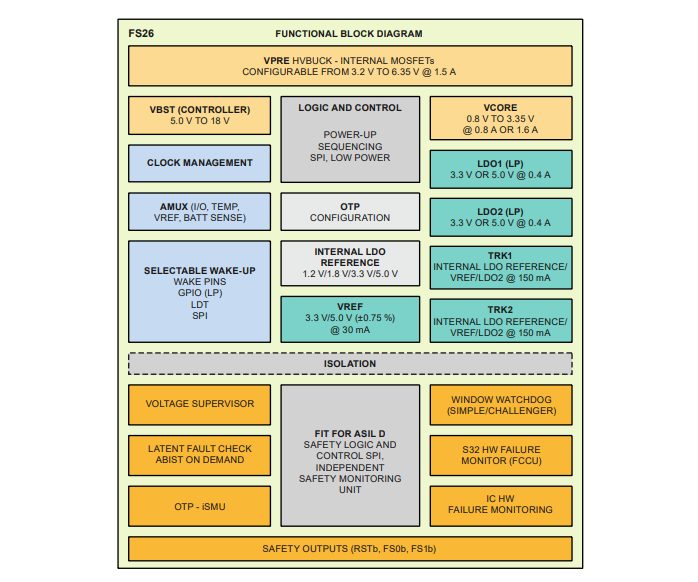
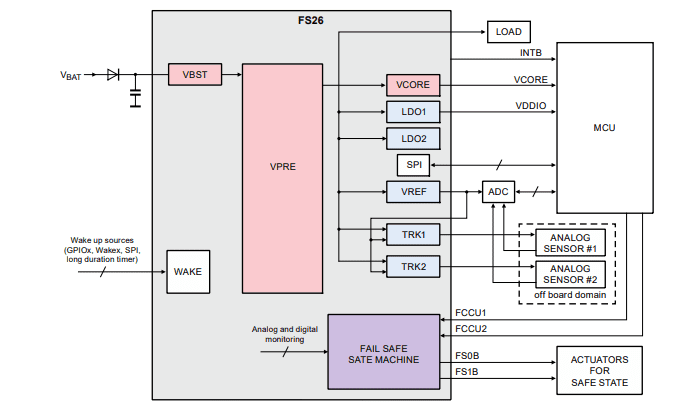
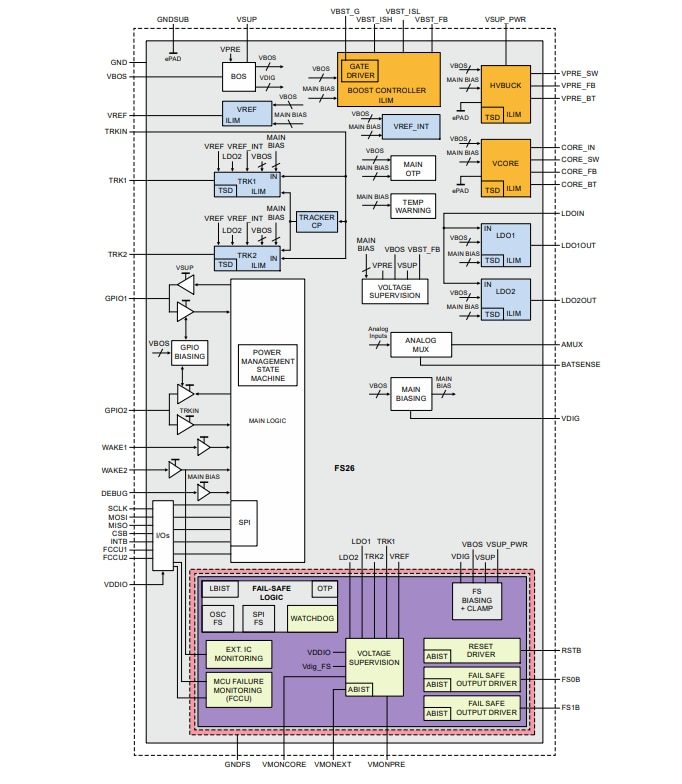
The NXP FS26 safety system basis chips implement multiple switch mode regulators and low dropout (LDO) voltage regulators to supply the microcontroller, sensors, peripheral ICs, and communication interfaces. The devices have a high-precision reference voltage supply for the system and two independent tracking regulators. Additionally, the FS26 features various functionality for system control and diagnostics, containing an analog multiplexer, General Purpose Input/Outputs (GPIOs), and selectable wakeup events from I/O, long duration timer, or Serial-Peripheral Interface (SPI) communication.
The FS26 is designed per the ISO26262 standard and comprises enhanced safety features with multiple fail-safe outputs. The device utilizes on-demand latent fault monitoring and can be part of a safety-oriented system partitioning scheme covering both ASIL B and ASIL D safety integrity levels.