- support@husseinkey.com
- livechat


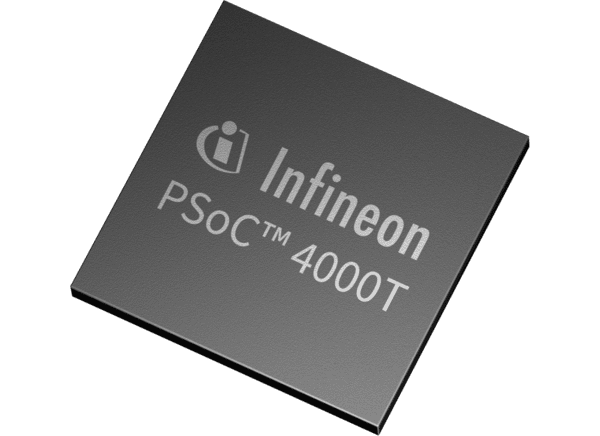
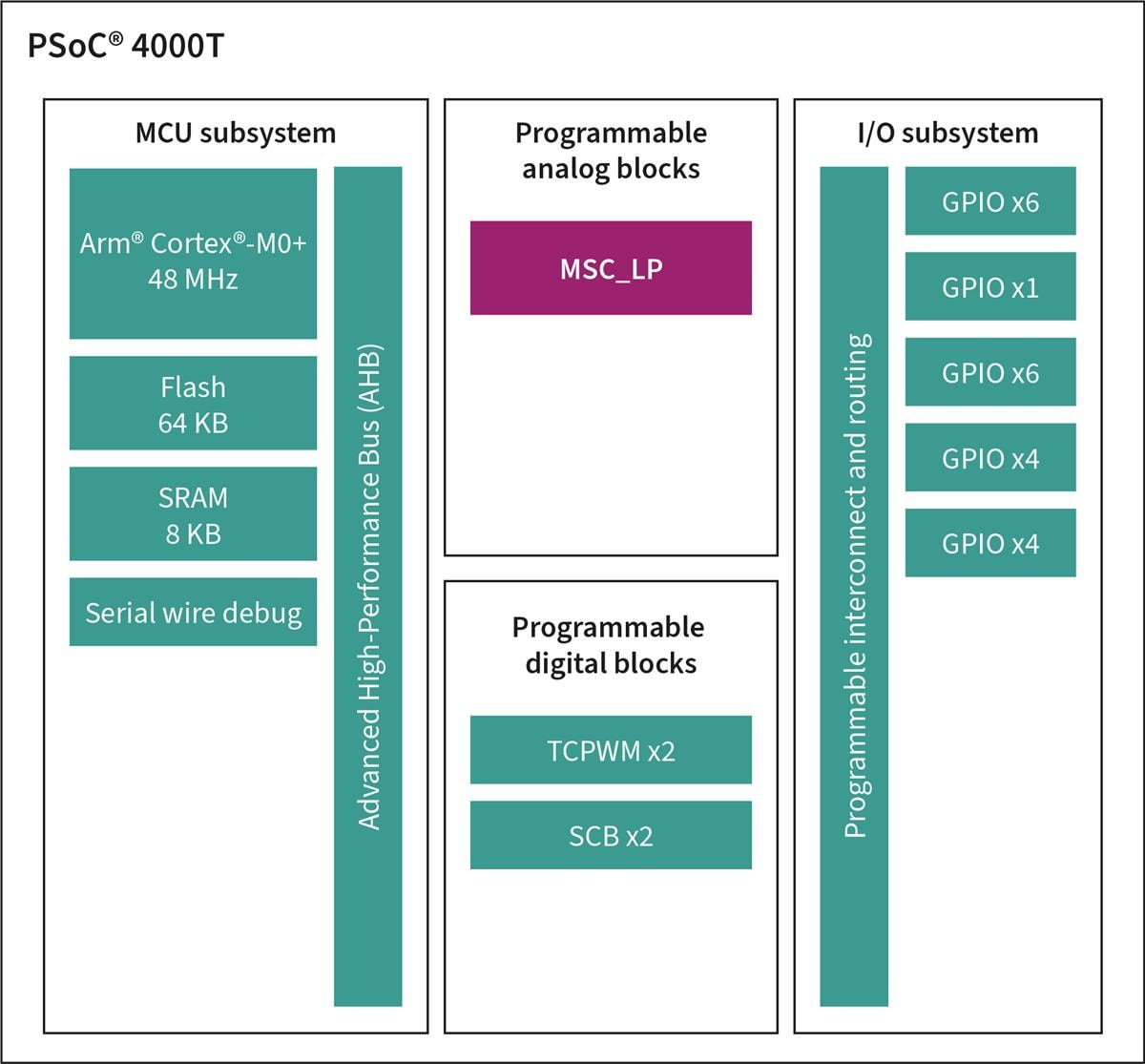
Infineon Technologies PSoC™ 4000T Arm® Cortex®-M0+ Microcontrollers features 5th generation CAPSENSE™ technology. The Infineon PSoC 4000T offers a 10x better signal-to-noise ratio (SNR) and 10x lower power consumption than the previous generation. This SNR and low power consumption allows always-on touch sensing for Human-Machine Interface (HMI), extending battery life in battery-powered products. The PSoC 4000T series provides reliability, robustness, liquid tolerance, and multi-sense capabilities. The device is suitable for wearable, hearable, and IoT devices that require low power and enhanced performance for a better user experience. Additionally, it offers an easy upgrade path for existing PSoC 4000 and PSoC 4000S designs to the fifth-generation CAPSENSE technology with software and package compatibility.
The 5th generation CAPSENSE touch-sensing tech is perfect for wearables and battery-powered smart devices. There is an “Always-On” feature that significantly reduces power usage in active and standby modes, extending battery life.
• Multi-sensing capabilities
• 10x higher SNR
• 10x lower power consumption
• Wide range of HMI options
• Long Range Proximity with Gestures
• Liquid Tolerant Performance
• Glove-Touch
• Provides a migration path for PSoC 4000 and PSoC 4000S-based designs
Thanks to the ModusToolbox™ platform, CAPSENSE applications are easily portable from one PSoC controller to another, allowing HMI application scalability across broad families of product designs.
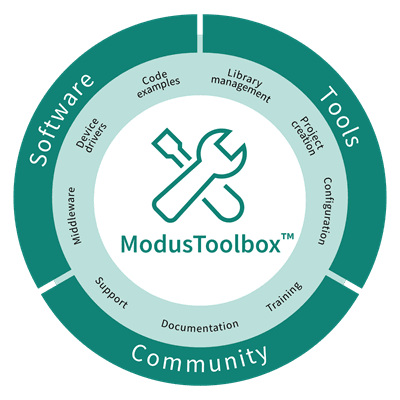
Infineon supplies a rich set of development resources to support the PSoC 4000T. The ModusToolbox development platform backs the development of CAPSENSE-based systems. ModusToolbox software is a modern, extensible development environment supporting a wide range of Infineon microcontroller devices, including the PSoC products. Provided as a collection of development tools, libraries, and embedded runtime assets, it provides a flexible and comprehensive development experience.
The ModusToolbox package includes desktop programs that enable:
• The creation of new embedded applications
• The management of software components
• Configuration of device peripherals and middleware
• Compiling, programming, and debugging
Click here to download ModusToolbox